
What are solar panel scams?
Solar panel scams use lies or hidden facts to sell, finance, or install a system. Common examples include bad solar contracts, inflated loans, fake rebates, false savings claims, and work that does not match the contract.
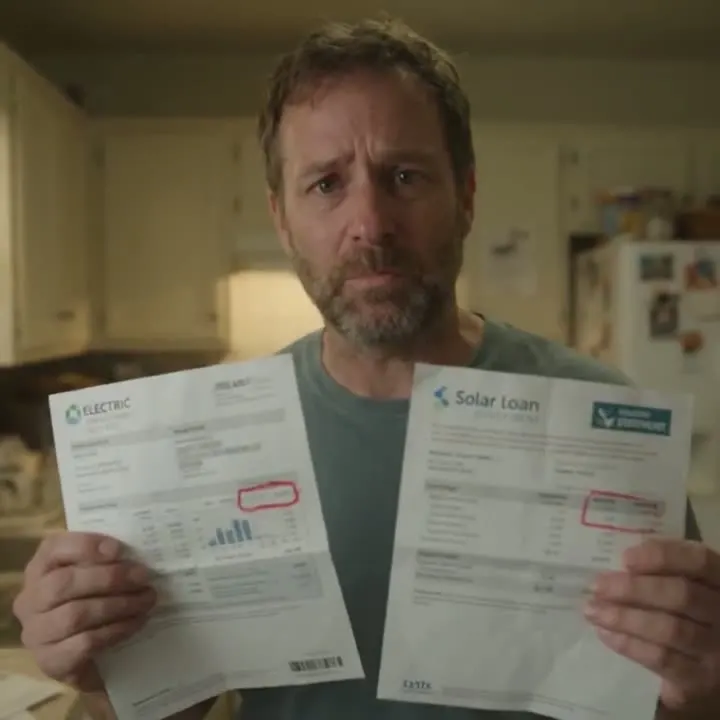
Take the free five-minute quiz. Tell us what the salesperson promised, what you signed, and what went wrong. We will organize your facts and see whether your situation may qualify for review by an independent consumer attorney.
Your information is encrypted in transit. Submitting the quiz does not create an attorney-client relationship. This site is operated by a marketing company, not a law firm.
Why call Firm #1… then Firm #2… then Firm #3 repeating your story, uploading files over and over, and waiting to see who asks for money first?
“Please take my case. How much is your retainer?”
Homeowners get screened for how much money they can fund upfront before anyone reads the disclosures or investigates the math.
“Here are the facts and documents I have. Is this something you can evaluate?”
Build your timeline and case dossier once using our guided case review. Let participating firms review the documentation and decide whether to reach out.
The Google Scenario
So you Google: “Solar fraud lawyer.” And what happens next? You tell someone your story. They ask a few questions. And eventually, the conversation turns to: How are you going to pay for legal services? Retainer. Hourly rate. Money upfront.
Those arrangements may be appropriate in some matters. But before assuming that paying a lawyer is your only option, ask: “Could any applicable law, based on the facts and jurisdiction, allow attorney fees to be sought from the other side?”
Their shortcut is your wallet. Our starting point is your evidence. Tell your story once. Build the timeline once. Let participating firms review the documentation first.
Solar Contract Review and TILA / UDAP Information
Some solar loans include dealer fees that raise the total price. Other complaints involve e-signatures made without permission or savings claims that do not come true. The federal Truth in Lending Act (TILA) and state Unfair and Deceptive Acts and Practices (UDAP) laws may protect homeowners in these cases.
Companies Listed
Solar lenders, installers, and PPAs listed with public complaint and contract information.
Resource Library
Learn about door-to-door pressure, fake free solar, loan traps, utility impersonation, and installers who disappear.
Look up installers, lenders, leases, power purchase agreements (PPAs), and public complaint patterns.
Organize screenshots, bills, contracts, and call records for a clear complaint.
Learn how the FTC Holder Rule, TILA, UDAP laws, cancellation rules, credit issues, and liens may apply.
Federal tips about fake rebates, pressure sales, and people who pretend to represent a clean-energy program.
A federal report on solar loans, dealer fees, payment increases, and consumer risks.
Where to report a problem to your state attorney general, licensing board, the FTC, or the CFPB.
Solar panel scams use lies or hidden facts to sell, finance, or install a system. Common examples include bad solar contracts, inflated loans, fake rebates, false savings claims, and work that does not match the contract.
A common solar panel scam is a rushed sale that uses fake deadlines, false savings claims, confusing tax-credit promises, or hidden loan costs.
Save your contract, loan papers, proposal, utility bills, messages, photos, and e-signature record. Check any cancellation deadline and report the problem in writing. Before you stop payments, ask a licensed attorney about your options.