Settling a Sunlight Financial Loan for an Unfinished Install [Dispute Template]
How to settle a Sunlight Financial loan when your contractor disappeared and your installation was never finished. Formal dispute letter template and legal rights.
Disclaimer This article is for consumer educational and informational purposes only and does not constitute formal legal advice. For formal legal representation or settlement negotiation, consult an attorney licensed in your state.
Overview
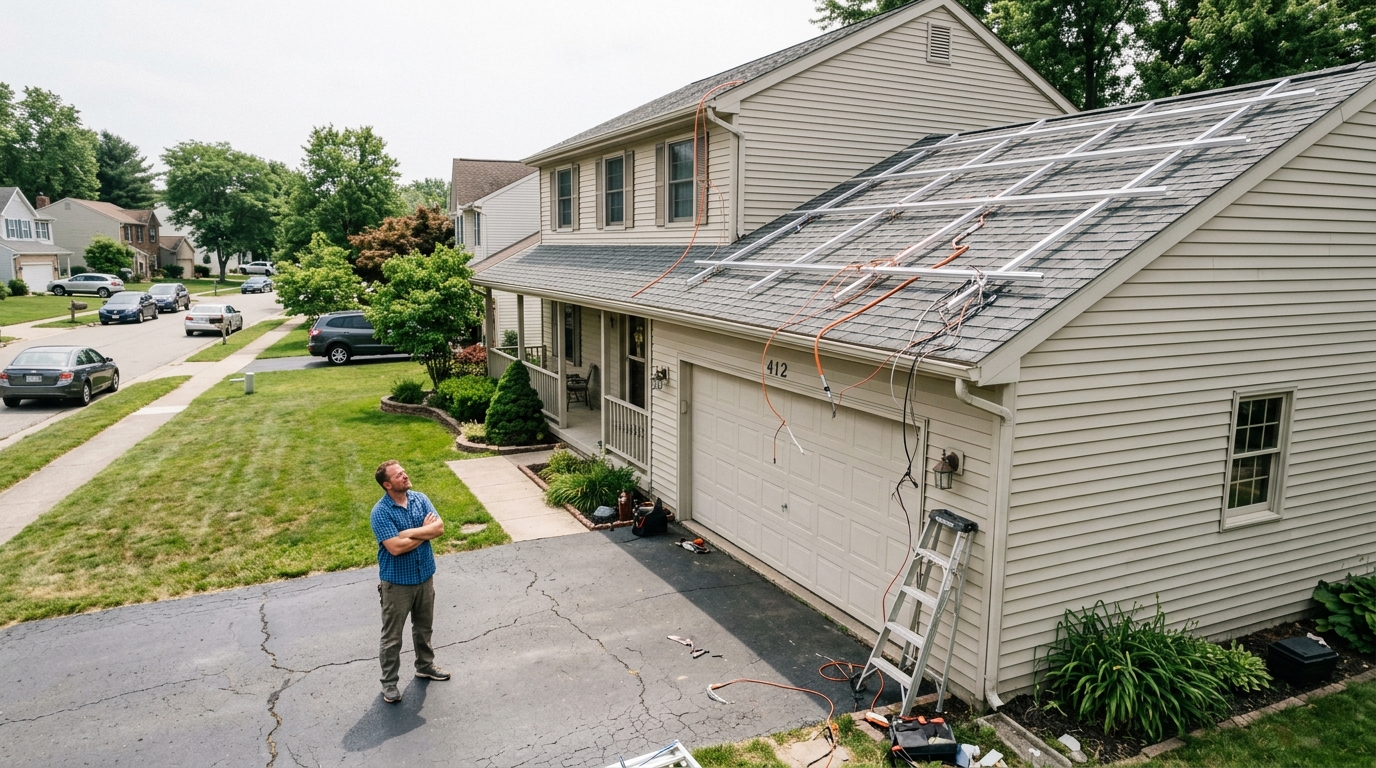
One of the most financially draining traps in residential solar financing occurs when a general contractor or solar sales company bundles solar panels with roofing, siding, or electrical panel upgrades, finances the entire $45,000 to $85,000 package through Sunlight Financial (and its originating partner Cross River Bank), and then completely disappears.
          THE UNFINISHED INSTALL DISPUTE PATH

  [Subcontractor Disappears]  ───>  [Unfinished Solar + Roof Work]
  (Walks off job mid-project)       (System Never Energized / No PTO)
              │                                    │
              ▼                                    ▼
   [Sunlight Financial / Servicer] ──> [Monthly Bills for $0 Production]
     (Holds $50k-$85k Loan Note)          (Demands 25-Year Payments)
              │                                    │
              ▼                                    ▼
  [Formal Legal Dispute Package] ───> [FTC Holder Rule 16 CFR § 433]
  • Certified Dispute Letter            • Rescission for Failure of Consideration
  • CFPB & State AG Complaints          • Settlement & UCC-1 Termination
Borrowers across states like Illinois, Texas, California, and Pennsylvania find themselves trapped in an unconscionable position: They have made monthly payments for one, two, or even three years on a solar array that was never permitted, never inspected, and never granted Permission to Operate (PTO).
When homeowners contact Sunlight Financial, they are frequently told: "We are just the financing platform. We already disbursed the funds to your installer, so you must continue paying your monthly note."
This response ignores federal lending law. When an installation is never completed, the borrower has suffered a total failure of consideration. Under the federal FTC Holder Rule, you have the legal right to challenge the enforceability of that debt, demand full cancellation, and seek settlement with Sunlight Financial and its underlying bank partner.
Key Takeaways
- Total Failure of Consideration If an installer walks off the job, fails to pull permits, or abandons panels that never produce power, the essential basis of the contract was never delivered. (See our guide on Sunlight Financial loan cancellation after installer bankruptcy).
- The FTC Holder Rule Weapon Under 16 CFR Part 433, all claims and defenses you hold against the defunct contractor apply directly to Sunlight Financial and the loan note holder.
- Milestone Funding Audits Solar lenders are contractually required to withhold final loan disbursements until milestone inspection or PTO sign-offs are completed. If Sunlight disbursed 100% of the loan funds without verified customer sign-off, they bear direct liability for negligent disbursement. (See our guide on disputing solar loan payments before permission to operate and removing a Sunlight Financial UCC lien).
- Contingency Representation & Fee-Shifting Many consumer protection attorneys handle these cases on contingency, leveraging state unfair and deceptive practices (UDAP) statutes that force the lender to pay your legal fees upon prevailing.
Why You Do Not Owe Full Balances on an Unfinished Installation
When Sunlight Financial approved your contractor as an authorized dealer, Sunlight entered into an origination agreement governing how loan proceeds were released. In standard solar financing protocols, funds are released in milestones:
- Milestone 1 (Design & Engineering) ~20% released upon contract execution and permit submission.
- Milestone 2 (Physical Installation) ~40% released when panels and inverters are mechanically affixed to the roof.
- Milestone 3 (Final Interconnection & PTO) ~40% released only after local municipal building inspection passes and the electric utility issues formal Permission to Operate.
In hundreds of consumer complaints submitted to the Consumer Financial Protection Bureau (CFPB) and state attorneys general, borrowers report that Sunlight Financial disbursed 100% of the loan proceeds to the disappearing contractor without ever receiving verified inspection certificates or utility PTO sign-offs.
By releasing the final funds prematurely—often based on forged contractor completion certificates—Sunlight destroyed the contractor’s financial incentive to finish the job. Under established common law contract principles, a creditor cannot enforce an executory contract where the creditor's own negligent funding practices caused the failure of performance.
How to Build Your Dispute File: The 4 Critical Evidentiary Anchors
Before sending a formal settlement demand, assemble these four evidentiary documents.
1. Municipal Building Department Records
Visit your local city or county building department. Request a certified permit history report for your address:
- Was an electrical or building permit ever pulled?
- Did the permit expire due to contractor abandonment?
- Did the building inspector issue a Notice of Violation or Stop Work Order?
2. Electric Utility Interconnection Records
Contact your electric utility’s solar interconnection department (e.g., ComEd, Ameren, PG&E, FPL):
- Demand a written statement confirming whether an interconnection application was ever approved and whether a bi-directional net meter was installed.
- A letter from your utility stating "No Permission to Operate has ever been granted for this account" is devastating evidence against Sunlight Financial.
3. Proof of Disappearing Subcontractors
Collect all evidence demonstrating contractor abandonment:
- Photographs of unfinished electrical conduit, exposed wiring, or unroofed sections.
- Copies of bounced emails, disconnected phone notices, and corporate dissolution records from your Secretary of State’s business registry showing the contractor is inactive or dissolved.
4. DocuSign Audit Trail & TILA Disclosures
Demand a certified copy of the electronic signature audit trail from Sunlight Financial. Verify whether your initials on the loan milestone release forms match your actual IP address or whether the sales rep forged completion sign-offs.
Formal Written Dispute Letter Template
Send this letter via Certified Mail, Return Receipt Requested to Sunlight Financial’s legal escalations department and carbon-copy the originating bank partner (typically Cross River Bank).
[Your Full Name]
[Your Street Address]
[City, State, ZIP Code]
[Account Number / Loan ID]
[Date]

VIA CERTIFIED MAIL — RETURN RECEIPT REQUESTED

Sunlight Financial LLC / Cross River Bank
Dispute & Legal Escalations Department
[Corporate Address on Loan Statement]

RE: FORMAL NOTICE OF DISPUTE, FAILURE OF CONSIDERATION, AND
    DEMAND FOR LOAN CANCELLATION UNDER THE FTC HOLDER RULE
    Account Number: [Insert Account Number]
    Contractor of Record: [Insert Contractor / Subcontractor Name]

To the Legal Escalations Department.

I am writing to formally dispute the entire outstanding balance and validity of the above-referenced consumer credit contract pursuant to the Federal Trade Commission's Trade Regulation Rule Concerning Preservation of Consumers' Claims and Defenses (16 C.F.R. Part 433), the Truth in Lending Act (15 U.S.C. § 1601 et seq.), and [Insert Your State's Consumer Fraud Statute, e.g., the Illinois Consumer Fraud and Deceptive Business Practices Act, 815 ILCS 505/].

1. TOTAL FAILURE OF CONSIDERATION AND CONTRACTOR ABANDONMENT
On [Date of Signing], I signed an agreement with [Contractor Name] for the purchase, installation, and complete utility interconnection of a residential solar energy system, financed through your institution. The contractor subsequently abandoned the installation on or about [Date Contractor Disappeared].

As of the date of this letter:
- The installation remains incomplete and physically non-operational.
- Local municipal permits were never inspected or closed [or were expired].
- The electric utility has never granted Permission to Operate (PTO), and no solar power is being generated.
- The contractor has dissolved, disconnected its business communications, and failed to perform.

2. FTC HOLDER RULE ENFORCEMENT (16 C.F.R. § 433.2)
My promissory note explicitly incorporates the mandatory federal Holder Rule notice, which mandates that any holder of this consumer credit contract is subject to all claims and defenses which the debtor could assert against the seller.

Because [Contractor Name] committed a complete and material breach of contract, fraud in the inducement, and failure of consideration, I am asserting those exact defenses directly against your institution as the holder of the note.

3. PREMATURE DISBURSEMENT OF LOAN PROCEEDS
Public records indicate that your institution disbursed loan funds to the contractor without verified proof of municipal inspection sign-off or utility PTO authorization. I never signed or authenticated an authorized certificate of completion.

DEMAND FOR RELIEF:
1. Immediately halt all monthly billing and collection activity on this account.
2. Formally rescind and cancel the remaining loan balance in its entirety.
3. Coordinate the complete release and termination of any UCC-1 Financing Statement or fixture filing recorded against my real property pursuant to UCC § 9-513.
4. Mark the credit trade line as "Disputed / Closed by Consumer" to prevent unlawful credit reporting under the Fair Credit Reporting Act (15 U.S.C. § 1681s-2).

Please provide your formal written response within thirty (30) days of receipt of this notice. If this matter is not resolved satisfactorily, I intend to file formal complaints with the Consumer Financial Protection Bureau (CFPB) and the [Insert State] Attorney General Consumer Protection Division, and pursue formal arbitration or legal representation.

Sincerely,

_________________________________________
[Your Signature]

[Your Printed Name]
Attachments:
- Municipal building department permit status report
- Utility statement confirming absence of Permission to Operate (PTO)
- Photographic evidence of unfinished installation
Escalating Beyond the Dispute Letter
If Sunlight Financial responds with a boilerplate rejection letter claiming that the loan is independent of the contractor, execute these three escalation measures.
1. File with the Consumer Financial Protection Bureau (CFPB)
Submit a formal complaint online at consumerfinance.gov under "Solar Financing / Loan Dispute." Attach your certified dispute letter, utility PTO denial, and contractor dissolution records. Federal regulations require Sunlight Financial to provide a formal substantive response within 15 days.
2. File with Your State Attorney General’s Consumer Protection Division
State AG offices (such as the Illinois Attorney General, California AG, or Texas AG) actively monitor solar financing companies that finance rogue dealer networks. AG complaints frequently trigger high-level regulatory inquiries that force solar lenders into loan write-downs.
3. Retain Consumer Protection Counsel on Contingency
Consumer protection statutes—such as the Illinois Consumer Fraud and Deceptive Business Practices Act (815 ILCS 505/) or California’s Consumer Legal Remedies Act (CLRA)—feature mandatory statutory fee-shifting provisions. If a lender attempts to enforce an unconscionable contract for an abandoned installation, an attorney can often take your case on contingency, meaning the lender pays your attorney's fees upon settlement.
For a full breakdown of vetting attorneys and fee structures, read our Solar Fraud Attorney Guide.
Sources and Official References
- Federal Trade Commission: The Holder Rule (16 CFR Part 433)
- Consumer Financial Protection Bureau: Submit a Complaint Against Solar Lenders
- Illinois General Assembly: Illinois Consumer Fraud and Deceptive Business Practices Act (815 ILCS 505/)
- Cornell Law LII: 15 U.S. Code § 1681s-2 (Responsibilities of Furnishers of Information under FCRA)
- Cornell Law LII: Uniform Commercial Code § 9-513 (Termination Statement)
FAQ
Can I settle my Sunlight Financial loan if the contractor never finished the job?
Yes. When a contractor walks off a solar installation midway through the job, the homeowner has received zero consideration for the debt. Under the federal FTC Holder Rule (16 CFR Part 433), you have the legal right to raise the contractor's non-performance directly against Sunlight Financial or Cross River Bank to negotiate a debt settlement, balance reduction, or complete loan cancellation.
What if Sunlight Financial claims the loan is separate from the installation contract?
Lender separation arguments represent an unviable defense under the FTC Holder Rule (16 C.F.R. § 433). that fails under federal law. Federal regulations mandate that all consumer solar promissory notes contain the FTC Holder Notice, which legally subjects the lender to all claims and defenses the consumer could assert against the seller. The lender cannot legally insulate itself from the contractor’s failure to complete the installation.
Did Sunlight Financial disburse loan money before the installation was done?
In many documented consumer complaints, lenders disbursed milestone payments directly to contractors based on electronic completion certificates that were never verified by the homeowner, or where sales representatives forged the homeowner's digital sign-off. You have the right to demand the full electronic funding disbursement audit trail to see what documents Sunlight relied upon to release your money.
How do I stop Sunlight Financial from reporting negative marks on my credit during a dispute?
Under the Fair Credit Reporting Act (15 U.S.C. § 1681s-2), when you submit a formal written dispute with supporting documentation, the furnisher of information must report the account as "Disputed." You should also file direct dispute letters with Equifax, Experian, and TransUnion attaching your utility PTO denial and certified dispute letter.
Do I need to pay a lawyer upfront to settle an unfinished solar loan?
Many consumer protection attorneys take unfinished solar installation cases on contingency or utilize statutory fee-shifting provisions under state unfair and deceptive practices acts. Under these laws, if the lender violated consumer protection standards or attempted to enforce an invalid contract, the lender is required by court order to pay your legal fees.
Next Research Steps
Use these resources to connect this issue with the broader solar scam pattern, the relevant legal framework, and the next practical action.
Solar panel scams
Start with the main solar panel scams guide for the broad definition and recovery roadmap.
Solar financing fraud compensation
Use this guide for loan, dealer-fee, payment-jump, PACE, lease, and lender-defense issues.
Homeowner legal rights
Review cancellation, rescission, UDAP, TILA, Holder Rule, arbitration, and lawsuit options.
Report solar fraud
Build a complaint packet for the FTC, CFPB, state attorney general, licensing board, or counsel.
Trapped in a predatory loan?
FTC Holder Rule & cancellation rights