Meraki Solar System Not Producing: Florida Rights & Remedies [Dispute Guide]
Meraki Solar system underperforming or failing to deliver promised utility savings? Learn your Florida FDUTPA rights, loan dispute steps, and legal remedies.
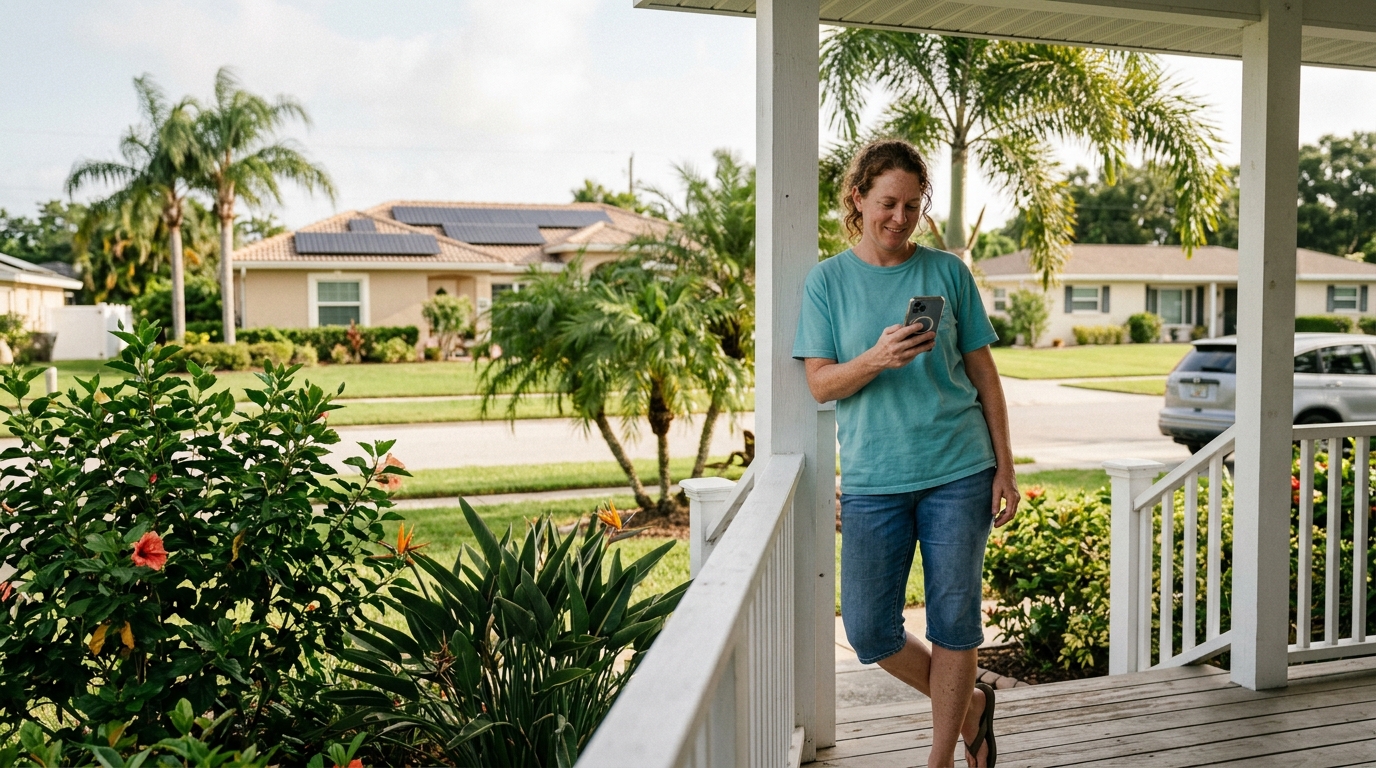
One of the most persistent complaints emerging from Florida homeowners involves rooftop solar systems that generate only a fraction of their promised electrical output. Homeowners who signed $35,000 to $55,000 installation contracts with Pensacola-based Meraki Solar report a common, distressing financial trap: after being promised that solar would completely replace their power bill with a nominal "$29.95 grid-connection fee," they are now stuck paying both a massive monthly solar loan payment and an unreduced electric bill from Florida Power & Light (FPL), Duke Energy, or Tampa Electric (TECO).
When the homeowner contacts customer service, they are frequently met with finger-pointing: the installer blames the local utility company, the utility company points to undersized hardware, and third-party lenders demand uninterrupted loan payments.
Disclaimer This article provides factual consumer education, statutory analysis, and regulatory dispute guidance under Florida law. It does not constitute formal legal advice. If your solar system is substantially underproducing or unpermitted, consult a licensed Florida consumer protection attorney to evaluate statutory notice deadlines.
1. The Anatomy of the "$29.95 Base Bill" Pitch
Across public consumer reviews and regulatory complaints, Florida homeowners describe a standardized door-to-door sales script utilized by solar canvassers:
- The Grid Independence Representation The representative claims that under Florida's net-metering rules, solar panels will produce 100% or more of the home's annual energy consumption, leaving the homeowner with only the minimum administrative meter fee (frequently quoted as approximately $25 to $30 per month).
- The Swapped Bill Promise The salesperson displays a digital spreadsheet showing that the homeowner's new monthly loan payment (e.g., $185/month) will simply "swap out" their existing $250 power bill, guaranteeing immediate day-one cash savings.
- The Harsh Post-Install Reality After installation, the system produces only 30% to 50% of the promised kilowatt-hours (kWh). During peak Florida summer cooling months, homeowners face monthly solar loan payments of $220 plus utility electric bills of $280, increasing their total household energy expenditure by hundreds of dollars per month.
                       The Dual-Bill Breakdown Trap
                                     │
        ┌────────────────────────────┴────────────────────────────┐
        ▼                                                         ▼
  What You Were Promised                                     What Actually Happened
• Solar replaces electric bill                        • Solar system under-produces by 50%+
• Only pay $29.95 utility fee                         • FPL / Duke bill remains $200–$300/mo
• Net monthly savings from Day 1                      • Solar loan payment adds $180–$250/mo
• Total Energy Cost: Lower                            • Total Energy Cost: Nearly Doubled!
2. Why Do Rooftop Systems Drastically Underproduce?
When an installed array fails to hit its design metrics, the defect usually stems from one of four design or operational failures.
1. Grossly Exaggerated Sales Modeling
Sales representatives often inflate solar production estimates using improper software settings—ignoring heavy shading from neighboring pine and oak trees, modeling panels on sub-optimal north-facing roof planes, or assuming 100% solar efficiency that is physically impossible under Florida humidity and cloud cover.
2. Microinverter and String Inverter Failures
In systems equipped with microinverters (such as Enphase) or central string inverters (such as SolarEdge), hardware components frequently fail without alerting the homeowner. Unless the homeowner regularly audits their inverter monitoring application, half of the rooftop array can remain dark for six to twelve months while generating zero electricity.
3. Utility Interconnection and PTO Gaps
In some instances, systems were physically mounted to the roof, but the installer never obtained final electrical inspection approval from the municipal building department or failed to submit the complete net-metering interconnection application to FPL or Duke Energy. The homeowner began paying the financing company while the system remained completely de-energized.
4. Grid Export Curtailment & Power Quality Issues
Voltage spikes on aging neighborhood distribution lines can cause sensitive inverter safety circuits to trip offline repeatedly during peak midday production hours, curtailing energy export back to the grid.
3. Your Rights Under Florida Consumer Law
Florida provides robust statutory protections for homeowners victimized by deceptive energy claims and construction defects.
The Florida Deceptive and Unfair Trade Practices Act (FDUTPA)
Under Florida Statutes § 501.204, unfair methods of competition, unconscionable acts or practices, and unfair or deceptive acts in the conduct of any trade or commerce are unlawful.
Presenting fabricated savings spreadsheets or promising utility bill reductions that the contractor knew—or should have known—were mathematically unachievable constitutes a classic FDUTPA violation. Under Fla. Stat. § 501.2105, a prevailing consumer is entitled to recover reasonable attorney's fees and court costs, providing consumer lawyers with the statutory leverage to take meritorious cases on contingency.
Florida Home Solicitation Sales Act
If your solar contract was solicited and executed at your residence (door-to-door), it is governed by Florida Statutes § 501.025. The seller must provide an explicit written notice of your 3-day right of rescission. Failure to provide proper statutory cancellation disclosures can extend the cancellation window under Florida law.
Contractor Licensing Oversight (DBPR)
Solar contractors must operate under a valid Certified Solar Contractor (CVC) or Certified Electrical Contractor (EC) license issued by the Florida Department of Business and Professional Regulation (DBPR). Operating without proper permits, utilizing uncertified qualifiers, or abandoning contracted work violates Florida Statutes Chapter 489 and can expose the contractor to disciplinary revocation and restitution orders.
4. Applying the FTC Holder Rule to Your Solar Loan
Most residential solar systems installed by Meraki Solar were financed through third-party point-of-sale lenders such as GoodLeap, Solar Mosaic, or Dividend Finance.
Homeowners often feel trapped because when they complain about underproduction, the lender asserts: "We only provided the financing; we do not warranty system performance."
This defense is legally invalid under federal law.
Pursuant to the FTC Holder Rule (16 C.F.R. § 433), every consumer credit contract contains mandatory language stating that any holder of the paper is subject to all claims and defenses that the debtor could assert against the seller. If the installer induced you into signing via deceptive savings misrepresentations under FDUTPA, you can assert those exact misrepresentations as a legal defense against the lender to:
- Cease further monthly loan payments;
- Demand complete rescission and cancellation of the remaining promissory note;
- Require the lender to remove any recorded UCC-1 fixture liens on your property.
5. Step-by-Step Action Plan for Underperforming Systems
If your system is not generating the promised kilowatt-hours, follow this 4-step dispute protocol.
Step 1: Export Your Empirical Production Data
Log into your inverter monitoring portal (Enphase Enlighten, SolarEdge, or proprietary app). Export daily and monthly lifetime generation logs (in kWh). Gather your last 12 to 24 months of electric utility bills showing your actual grid imports and net-metering export credits.
Step 2: Compare Against the Original Design Proposal
Locate the original sales proposal or contract addendum. Identify the specific annual production estimate (e.g., "System will produce 14,200 kWh in Year 1"). Calculate the percentage variance. $$\text{Production Deficit} = \frac{\text{Guaranteed kWh} - \text{Actual kWh}}{\text{Guaranteed kWh}} \times 100$$ A sustained deficit exceeding 20% to 30% without severe physical shade changes strongly indicates either engineering negligence or fraudulent sales overestimation.
Step 3: Send a Formal Notice of Dispute and Cure
Send a formal written dispute letter via Certified Mail to Meraki Solar and your financing company. State the exact kilowatt-hour shortfall, demand an immediate certified engineering inspection, and request that the financing company place the loan into an administrative dispute freeze pending technical resolution.
Step 4: File Official Regulatory Complaints
If the company fails to rectify the system or reimburse your excess utility bills within 30 days:
- File an online consumer complaint with the Florida Office of the Attorney General (Consumer Protection Division);
- Submit a contractor complaint with the Florida DBPR Construction Industry Licensing Board;
- Submit a formal lending dispute with the Consumer Financial Protection Bureau (CFPB) targeting the financing company.
Sources and Official References
- Florida Statutes § 501.204 (FDUTPA Unfair and Deceptive Trade Practices) — Florida's statutory framework for consumer fraud and deceptive marketing.
- Florida Statutes § 501.2105 (Attorney's Fees Under FDUTPA) — Statutory fee-shifting provisions for prevailing consumers.
- FTC Holder Rule (16 C.F.R. § 433) — Federal rule preserving consumer defenses against assignee creditors and lenders.
- Florida Department of Business and Professional Regulation (DBPR) — Licensing verification and disciplinary records for Florida electrical and solar contractors.
- Florida Public Service Commission — Net Metering Rules — Regulatory standards governing solar utility interconnection and billing in Florida.
FAQ
Does Florida law guarantee that solar panels will eliminate my electric bill?
No. Florida law does not guarantee zero electric bills. While Florida administrative rules require investor-owned utilities (FPL, Duke, TECO) to offer net metering, your bill depends entirely on how much energy your household consumes compared to how much your system actually generates. Sales claims guaranteeing a "$0 bill" or fixed "$29.95 bill" are marketing pitches, not statutory entitlements.
Can I sue Meraki Solar if my production is lower than the sales pitch?
Yes. If the salesperson made specific, factual representations regarding energy production or utility savings that induced you to sign, and those representations proved materially false, you may have actionable claims under the Florida Deceptive and Unfair Trade Practices Act (FDUTPA), breach of contract, or negligent misrepresentation.
What should I do if Meraki Solar ignores my warranty and service requests?
If the company fails to respond to service requests for months while your system remains down, document every unanswered phone call, support ticket, and email. You can send a formal 30-day demand letter alleging breach of contract and file complaints with the Florida Attorney General and DBPR. If the system was financed, you can assert these failures against your lender under the FTC Holder Rule.
Will withholding solar loan payments ruin my credit score?
Unilaterally stopping payments without formal legal notice will generally trigger automated negative credit reporting and collection actions by the lender. Before stopping payments, consult with a consumer protection attorney to serve a formal legal dispute under the FTC Holder Rule, the Fair Credit Billing Act, and the Fair Credit Reporting Act, which creates a formal legal record of the bona fide dispute.
Next Research Steps
Use these resources to connect this issue with the broader solar scam pattern, the relevant legal framework, and the next practical action.
Solar panel scams
Start with the main solar panel scams guide for the broad definition and recovery roadmap.
Homeowner legal rights
Review cancellation, rescission, UDAP, TILA, Holder Rule, arbitration, and lawsuit options.
Solar financing fraud compensation
Use this guide for loan, dealer-fee, payment-jump, PACE, lease, and lender-defense issues.
Report solar fraud
Build a complaint packet for the FTC, CFPB, state attorney general, licensing board, or counsel.
Misled by a solar company?
Free 24-hr review · Statutory fee-shifting