Pink Energy Collapsed. Your Sunlight Loan Didn't.
Pink Energy's Chapter 7 left thousands with dead Generac SnapRS systems and active Sunlight loans. What nine attorneys general asked lenders to do, and your options.
Disclaimer This article is factual consumer education and legal-news analysis, not legal advice. Warranty rights, Holder Rule claims, and limitations periods depend on your contract, your state, and your specific equipment. Consult a licensed consumer-protection attorney in your state.
Answer First
Power Home Solar LLC, doing business as Pink Energy, filed Chapter 7 on October 7, 2022. Chapter 7 is liquidation, not reorganization. There is no reorganized company, no warranty department, and no successor to call. The workmanship warranty you were sold effectively ended that day.
Your loan did not end. It is still owned by someone, and it is still billing.
The path that remains runs through the lender, not the installer — and in November 2022 a coalition of nine attorneys general formally asked five solar lenders, Sunlight Financial among them, to suspend loan payments and interest for Pink Energy customers who never received working systems.
Key Points
- The equipment failure was real and documented. Generac acknowledged a greater than 40% failure rate in its SnapRS rapid-shutdown devices as of June 2022. The units were installed in nearly every Pink Energy system since 2020, and were linked to at least two house fires.
- Pink Energy blamed Generac and sued. It filed against Generac Power Systems in federal court in Virginia on August 1, 2022, seeking roughly $39 million in replacement costs. The Chapter 7 filing stayed that case.
- Nine AGs, five lenders. Led by North Carolina's Josh Stein and Kentucky's Daniel Cameron, the coalition named Dividend Solar Finance, GoodLeap, Cross River Bank, Sunlight Financial, and Solar Mosaic.
- Your leverage is the FTC Holder Rule. It lets you assert the seller's failures against whoever holds the loan — which is the only solvent party left.
What Actually Failed
The SnapRS is an inline rapid-shutdown device required by the National Electric Code to de-energize individual panels for firefighter safety. Pink Energy installed Generac SnapRS units in essentially every system it built from 2020 onward.
The units failed at scale. By June 2022, Generac had acknowledged a failure rate above 40%. When a SnapRS device destabilizes, the paired PWRcell inverter can shut down the entire string of panels containing it — the condition homeowners saw reported as a "PVRSS lockout." The visible symptom is a system that stops producing while the monitoring app shows an error or nothing at all.
No national recall was issued.
The consequence for Pink Energy was terminal. Its valuation fell from roughly $1.05 billion in September 2021 to $452 million by June 2022. It laid off about 500 employees in September 2022, on top of roughly 600 earlier cuts. It sued Generac in August, and filed Chapter 7 in October.
For homeowners, the consequence is a roof full of hardware that may be physically fine but electrically locked out, with no installer to diagnose it and a service call nobody will honor.
Why Chapter 7 Matters More Than Chapter 11
Bankruptcy chapter classification determines what is available to you, and it is worth being precise about.
| Chapter 11 | Chapter 7 | |
|---|---|---|
| What it is | Reorganization | Liquidation |
| Company after | Continues in some form | Ceases to exist |
| Warranty | May be assumed or assigned | Effectively worthless |
| Who to pursue | The reorganized entity | Nobody — assets are sold, claims queue |
| Realistic recovery | Possible | Near zero for unsecured consumers |
Pink Energy filed Chapter 7. There is no reorganized Pink Energy. Filing a claim in that estate as an unsecured creditor puts you behind secured creditors and administrative expenses, and consumer recoveries in cases like this are typically negligible.
That is why the lender is the only realistic counterparty. Not because the lender broke your panels, but because it is the solvent party in a contract that federal law connects to the seller's conduct. See installer bankruptcy and lender liability.
The Nine-Attorney-General Action
In November 2022, North Carolina Attorney General Josh Stein and Kentucky Attorney General Daniel Cameron led a coalition of nine attorneys general in formally calling on five solar lenders — Dividend Solar Finance, GoodLeap, Cross River Bank, Sunlight Financial, and Solar Mosaic — to suspend loan payments and halt interest accrual for consumers who financed Pink Energy systems and never received working installations. Michigan's Dana Nessel and Tennessee's office joined that month; Virginia's office continued a parallel investigation.
Two things to understand about it:
- It was a request, not an order. No court compelled the lenders to do anything. Some borrowers obtained modifications or forbearance; many did not.
It is still useful to you. It is an official, citable, public record of state law enforcement concluding that these specific lenders financed systems that did not work, and asking them to stop collecting. That is a document worth attaching to a written dispute, a CFPB complaint, or an arbitration demand — years later.
The complaints those AGs collected also alleged that Pink Energy made false representations about system capability and expected bill reduction, and misrepresented tax-credit eligibility. Separately, reporting documented at least one Pink Energy loan application in which the customer's stated income was doubled. If your system was financed through Pink Energy, request a copy of your credit application and check the income figure against reality.
What to Do Now
Step 1: Document the system's actual condition
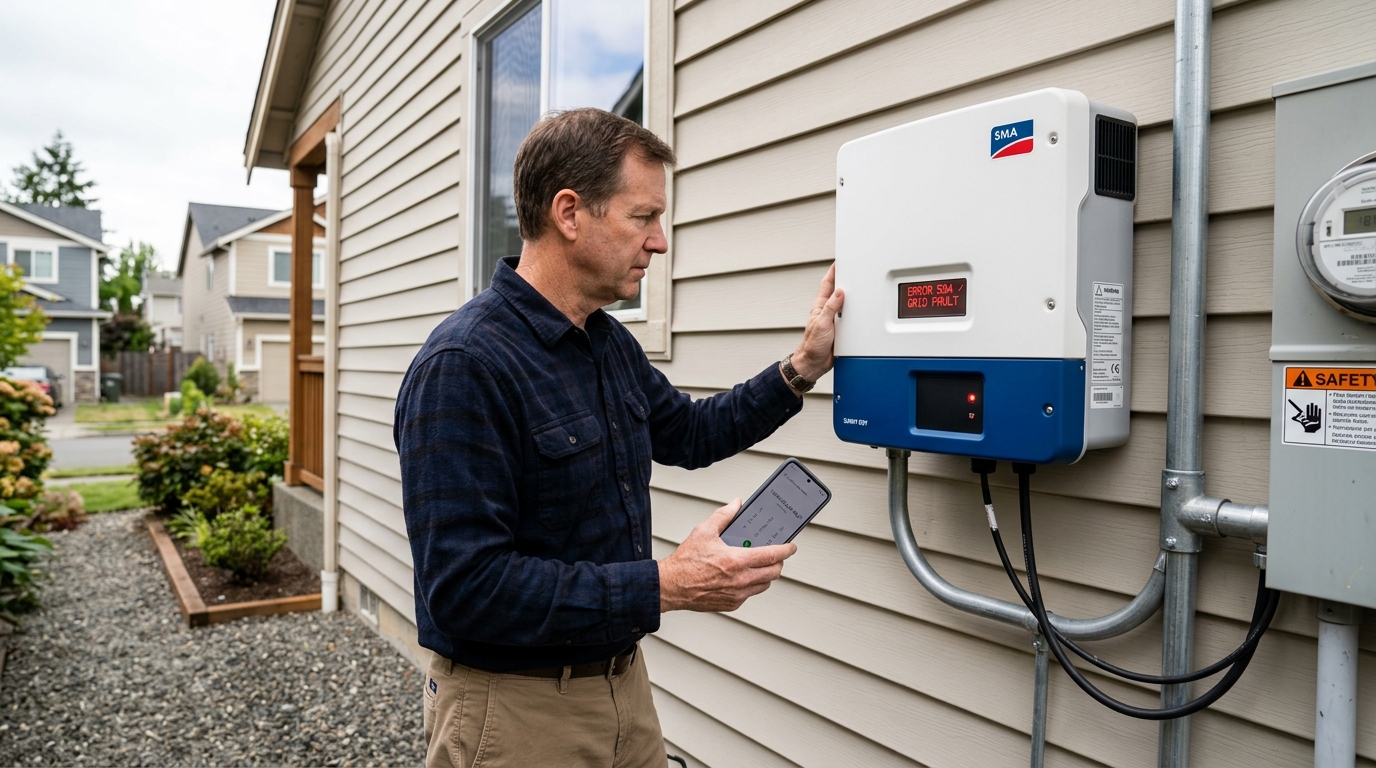
Photograph the inverter display and any error codes. Screenshot the monitoring app showing zero or degraded production. Pull your utility bills from before and after the failure. Note the date production stopped. This is the factual core of any claim.
Step 2: Identify the equipment
Find the inverter model (PWRcell) and confirm whether SnapRS devices are installed. An independent solar electrician can confirm this in one visit and put it in writing. That inspection report is worth its cost.
Step 3: Pursue the manufacturer warranty separately
Your installer is gone. Your equipment manufacturer is not. Generac remains a solvent company, and manufacturer warranties on panels, inverters, and components run independently of the installer's workmanship warranty. Contact Generac directly with your serial numbers. This will not cover labor in most cases, but it can cover parts — and a documented manufacturer claim strengthens everything else.
Step 4: Get an independent repair quote
A written quote from a licensed solar contractor to restore the system to working order converts "my system is broken" into a specific dollar figure. That number becomes your damages.
Step 5: Identify who holds your loan
Sunlight-originated paper often names Cross River Bank as the creditor, and loan pools were sold — approximately $300 million in January 2024. Disputes must reach the current holder. See who owns and services your Sunlight Financial loan.
Step 6: Send a written Holder Rule dispute
Certified mail, return receipt requested, to the servicer and the identified holder. State the failure of consideration — a financed system that does not produce power — cite 16 C.F.R. § 433.2, attach your documentation, reference the nine-AG November 2022 request, and formally dispute the debt. See the FTC Holder Rule and solar lender liability.
Step 7: File with regulators
The CFPB at consumerfinance.gov/complaint and your state Attorney General's consumer protection division. Reference the prior multistate action by name. See documents to send with a solar complaint.
Step 8: Do not simply stop paying
Delinquencies report regardless of the merits, and the credit damage becomes an extra item you must negotiate back. Dispute formally first. See 6 ways to fight a solar loan, compared.
A Note on Deadlines
Pink Energy's corporate bankruptcy occurred in 2022. Statutes of limitations on contract, scams, and state consumer-protection claims vary by state and typically run from the transaction or from discovery of the injury — and several are now uncomfortably close for Pink Energy customers who have been waiting to see whether anything would be done for them.
If you have a dead Pink Energy system and an active loan, the cost of getting a consultation now is zero and the cost of waiting may be your claim. Consumer-protection attorneys generally take viable solar matters on contingency because these statutes carry fee-shifting provisions.
FAQ
Is Pink Energy's warranty still valid?
No, in any practical sense. Power Home Solar LLC, doing business as Pink Energy, filed Chapter 7 liquidation on October 7, 2022. There is no successor entity to honor a workmanship warranty. Manufacturer warranties on the equipment itself — from Generac or panel makers — are separate and may still be enforceable.
Do I still have to pay my Sunlight Financial loan if Pink Energy never finished my system?
The loan remains legally enforceable unless and until it is modified, settled, or cancelled. What you have is the right to formally dispute it — asserting failure of consideration and the seller's misconduct against the loan holder under the FTC Holder Rule. Stopping payment without that written dispute damages your credit without advancing your position.
What was the Generac SnapRS problem?
The SnapRS is a rapid-shutdown device installed in nearly every Pink Energy system from 2020 onward. Generac acknowledged a failure rate above 40% as of June 2022, and the failures were linked to at least two house fires. Failing units can trigger inverter lockouts that shut down entire strings of panels.
Did the attorneys general force lenders to cancel Pink Energy loans?
No. In November 2022, a nine-state coalition led by North Carolina and Kentucky asked Dividend, GoodLeap, Cross River Bank, Sunlight Financial, and Solar Mosaic to suspend payments and interest for affected customers. It was a formal request, not a court order. Some borrowers obtained relief; many did not.
Can I sue Generac directly?
Pink Energy itself sued Generac in August 2022 seeking roughly $39 million, and that case was stayed by the bankruptcy. Whether an individual homeowner has a viable direct claim against a manufacturer depends on your state's product liability and warranty law and on your specific equipment. Ask an attorney — and pursue the manufacturer warranty through Generac in the meantime.
Who do I contact to fix my Pink Energy system?
Any licensed solar contractor can diagnose and repair it, though most will not honor another company's warranty and will charge for the work. Get a written repair quote regardless: it establishes your damages even if you do not proceed with the repair.
Is it too late to do anything about my Pink Energy system?
Possibly not, but the window is narrowing. The collapse occurred in 2022 and limitations periods on contract, scams, and consumer-protection claims vary by state. Get a consultation now rather than waiting for a development that may not come.
Related Resources
- Identify the right counterparty first: who owns and services your Sunlight Financial loan.
- The lender-liability mechanism: installer bankruptcy and lender liability.
- What outcomes look like: solar loan settlements and what homeowners recover.
- If your payment also jumped: Sunlight Financial payment increases explained.
- The full company record: Sunlight Financial lawsuits and complaints.
Sources
- North Carolina Department of Justice, Attorney General Josh Stein Calls On Five Solar Lending Companies to Suspend Loan Payments and Interest for Pink Energy Customers (November 2022).
- Michigan Attorney General Dana Nessel, AG Nessel Joins 8 Other States in Urging Five Solar Lending Companies to Suspend Loan Payments, Interest for Pink Energy Customers (November 29, 2022).
- Tennessee Attorney General, Tennessee Joins Multi-State Coalition Urging Five Solar Lending Companies to Suspend Loan Payments for Pink Energy Customers (November 22, 2022).
- pv magazine USA, Pink Energy files lawsuit against Generac (August 11, 2022).
- PR Newswire, Pink Energy Forced to Lay Off 500 More Employees as Result of Faulty Generac Solar Equipment (September 2022).
- WCNC Charlotte, Pink Energy, formerly known as Power Homes, declares bankruptcy (October 2022).
- WBTV, Pink Energy loan agreement for customer falsely doubled her income (October 18, 2022).
- Federal Trade Commission, Preservation of Consumers' Claims and Defenses (Holder Rule), 16 C.F.R. Part 433.
Dead system, live loan?
A financed system that does not produce power is a documented failure of consideration — and the lender, not the vanished installer, is the party that can act on it. Our eligibility form organizes your production records, repair quotes, and loan documents for review and may route qualifying matters toward a consumer-protection attorney. We are a marketing company, not a law firm, and submitting the form does not create an attorney-client relationship.
Next Research Steps
Use these resources to connect this issue with the broader solar scam pattern, the relevant legal framework, and the next practical action.
Solar panel scams
Start with the main solar panel scams guide for the broad definition and recovery roadmap.
Solar financing fraud compensation
Use this guide for loan, dealer-fee, payment-jump, PACE, lease, and lender-defense issues.
Solar company complaint directory
Look up installers, lenders, bankruptcies, warranty problems, and customer-service complaint patterns.
Homeowner legal rights
Review cancellation, rescission, UDAP, TILA, Holder Rule, arbitration, and lawsuit options.
Trapped in a predatory loan?
FTC Holder Rule & cancellation rights