Successor Company Demands Reactivation Fee After Bankruptcy [Rights Guide]
Discharged your solar lease in Chapter 7 and the successor company wants $2,100 to reactivate? Learn your rights regarding panel removal, abandonment, and fees.
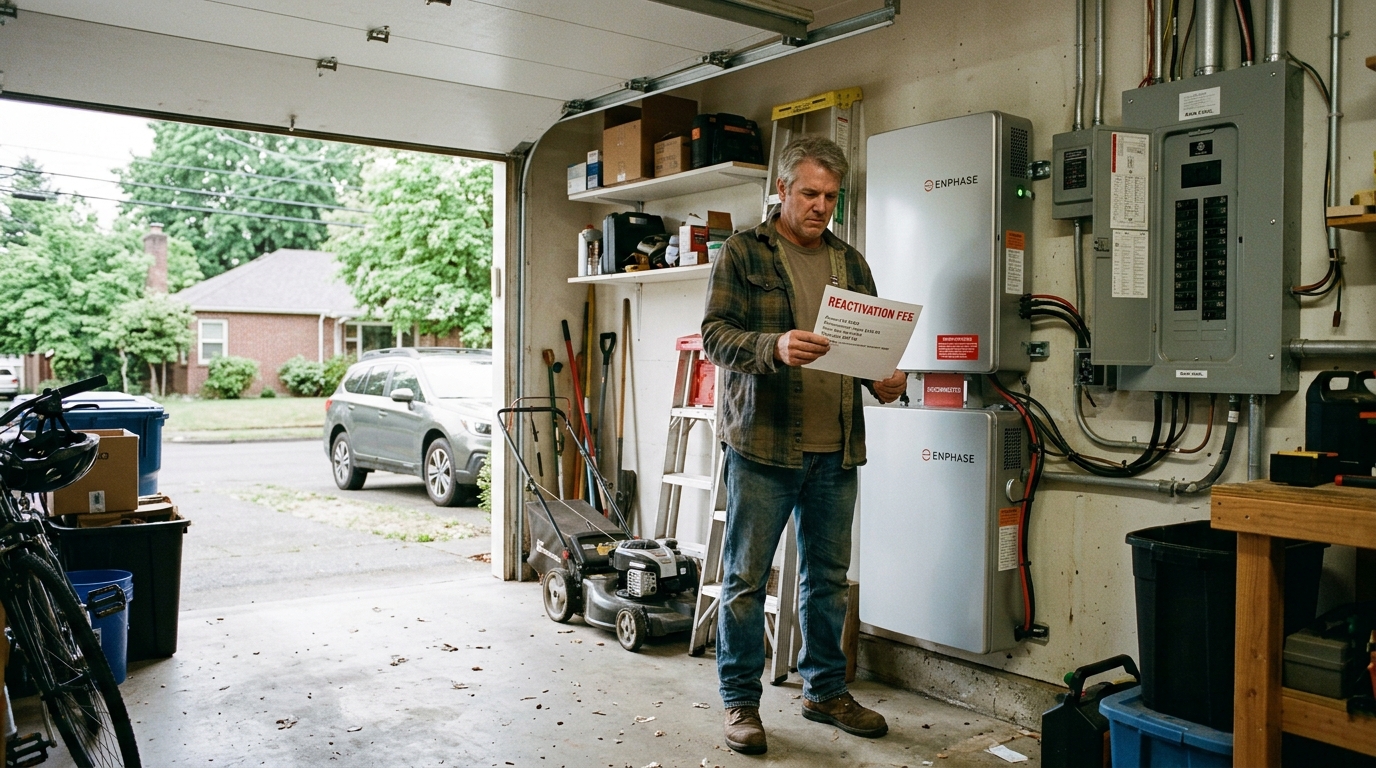
Disclaimer: This article provides legal information and regulatory education regarding consumer bankruptcy rights. It does not constitute formal legal advice. If a successor lender or servicer attempts to collect on a discharged debt, contact your bankruptcy attorney immediately to discuss a motion for contempt of the discharge injunction.
Overview
A distressing pattern documented in consumer bankruptcy records and legal Q&A forums involves homeowners who successfully surrendered their residential solar lease in a Chapter 7 bankruptcy, only to be ambushed by a successor company months later.
In a typical case, the homeowner listed the solar lease on Schedule G (Executory Contracts and Unexpired Leases), stated their intention to surrender the equipment on the Statement of Intentions, and received a formal discharge under 11 U.S.C. § 727. The original installer or lessor (such as SunPower, Sunnova, or a regional provider) went bankrupt, and a successor portfolio servicer (such as SunStrong Management, Spruce Power, or an asset-recovery trust) purchased the distressed lease portfolio.
Instead of sending technicians to remove the solar panels, the successor company sends a demand letter: they demand a "reactivation fee" or "re-inspection charge" of $1,500 to $2,500 to turn the system back on, or claim that monthly payments must resume. When the homeowner responds that the lease was rejected in bankruptcy and demands that the panels be removed from their roof, the successor company refuses to schedule removal or demands that the homeowner pay several thousand dollars in decommissioning costs.
Homeowners in this position hold substantial federal statutory leverage under the Bankruptcy Discharge Injunction (11 U.S.C. § 524), the common law of fixtures and property abandonment, and state unfair trade practices laws.
Key Points
- The Federal Discharge Injunction (11 U.S.C. § 524(a)(2)): Discharges permanently extinguish personal liability (in personam). Any attempt by a successor company to condition removal on payment, collect back-lease payments, or threaten credit reporting violates federal court orders.
- In Rem vs. In Personam Rights: While the successor may retain an ownership interest in the physical hardware (in rem), they cannot force you to pay a single dollar to reactivate, maintain, or service the system.
- The Economic Stalemate: Successor companies intentionally stall panel removals because sending a crew, boom crane, and electricians to unmount 25 panels costs $3,000–$5,000, while the used equipment has negligible market value.
- Statutory Demand to Retrieve or Abandon: Homeowners can serve a formal notice to the successor to remove collateral within 30 to 60 days, after which the property may be treated as abandoned or subject to roof storage fees.
- Bankruptcy Court Contempt Sanctions (11 U.S.C. § 105(a)): Bankruptcy judges can reopen closed bankruptcy cases to assess actual damages, attorney's fees, and punitive sanctions against servicers who attempt to extract fees for discharged contracts.
Why Successor Servicers Demand Reactivation Fees
When a solar company goes bankrupt, its lease and PPA contracts are auctioned in bankruptcy court (often under Section 363 of the Bankruptcy Code). Distressed asset buyers purchase these portfolios at deep discounts—frequently paying 5 to 15 cents on the dollar.
These successor servicers operate asset-management playbooks designed to minimize operational costs while maximizing cash recovery.
[ Chapter 7 Discharge ] ──> [ Lease Rejection on Sched G ] ──> [ Personal Liability Extinguished ]
                                                                                │
[ Successor Purchases Distressed Paper at Discount ] <──────────────────────────┘
           │
           ├──> Option A: Spend $4,000 to physically remove used panels (Negative ROI)
           │
           └──> Option B: Demand $2,100 "Reactivation Fee" or threaten title clouds (High ROI Extortion)
- Physical Removal is a Financial Loss: Dismantling rooftop solar requires licensed roofers and electricians, permits, and roof penetration resealing. The hardware (e.g., 5- to 10-year-old inverters and panels) has virtually zero resale value on the secondary market.
- Reactivation is Pure Profit: If the servicer can frighten a homeowner into paying a $2,100 "reactivation fee," they generate immediate revenue without doing physical work.
- The Escrow Hostage Tactic: If the homeowner refuses to pay, the servicer leaves the panels bolted to the roof and allows a UCC-1 fixture filing to remain in county records, betting that the homeowner will be forced to pay an extortionate buyout when they eventually sell or refinance their home.
The Discharge Injunction: Your Federal Shield
When you receive a bankruptcy discharge under Chapter 7, Section 524(a)(2) of the Bankruptcy Code operates as a permanent statutory injunction against.
"the commencement or continuation of an action, the employment of process, or an act, to collect, recover or offset any such debt as a personal liability of the debtor..."
What the Successor CAN Legally Do
The successor servicer retains an in rem property interest in the panels (assuming their UCC fixture filing was perfected and not avoided). They have the legal right to:
- Politely contact you to coordinate a date and time for their licensed technicians to enter your property and unmount the panels.
- Propose a voluntary contract if you express affirmative interest in using the solar system.
What the Successor CANNOT Legally Do
Under 11 U.S.C. § 524 and established consumer bankruptcy case law, the successor cannot:
- Demand that you pay past-due pre-petition or post-petition lease arrears.
- Demand that you pay a "reactivation fee," "inspection fee," or "transfer penalty" as a condition of honoring your property rights.
- Threaten to send the account to third-party collection agencies.
- Threaten to report a delinquency to credit bureaus (Equifax, Experian, TransUnion).
- Require you to pay for the cost of removing their own equipment from your roof.
If a servicer sends written correspondence asserting that you "owe" money on a rejected lease or demands money to release their claim, they are flirting with a willful violation of the discharge injunction.
Removal vs. Abandonment: The Three Real Paths Forward
If a successor servicer contacts you demanding thousands of dollars to reactivate panels you rejected in bankruptcy, you have three primary tactical paths.
| Pathway | Strategy | Best When | Cost to You |
|---|---|---|---|
| Path 1: Formal Notice to Retrieve or Abandon | Send a 30-day deadline demand letter requiring the company to retrieve equipment or forfeit it as abandoned property. | You want the panels off your roof immediately. | $0 (Servicer pays removal). |
| Path 2: De Minimis Buyout Negotiation | Offer a nominal settlement ($250–$500) for a full bill of sale, UCC-3 termination, and ownership of the system. | You want to keep the panels and hire an independent electrician to turn them on. | $250–$500 one-time payment. |
| Path 3: Motion for Contempt & Sanctions | Reopen your Chapter 7 case and file a motion for sanctions under 11 U.S.C. § 105(a). | Servicer makes threats of collections, liens, or credit reporting. | $0 (Attorney fees shifted to servicer). |
The "Notice to Retrieve Collateral" Framework
A debtor cannot unilaterally tear solar panels off a roof and discard them without providing the secured party due process. However, a homeowner is not required to provide free rooftop storage indefinitely for a bankrupt company's abandoned hardware.
Under state property and bailment laws (such as California Civil Code § 1980 et seq. and Uniform Commercial Code § 9-609), property owners can establish an orderly timeline for collateral recovery.
[ Step 1: Formal Demand Letter ] ──( 30-60 Day Window )──> [ Step 2: Deadline Passes ]
                                                                       │
[ Servicer Refuses / Fails to Remove ] <───────────────────────────────┘
                 │
                 ├──> File Motion in Bankruptcy Court to Extinguish Lien
                 └──> Assert Commercial Storage Fees or Deem Property Abandoned
Key Elements of the Notice:
- Identify the Bankruptcy Case: State the bankruptcy court, case number, filing date, and discharge date.
- Attach the Discharge Order and Schedule G: Prove that personal liability was terminated and the executory lease contract was rejected.
- Set a Concrete Retrieval Deadline: Provide a reasonable window (typically 30 to 45 business days) for the company to dispatch insured, licensed contractors to remove the equipment and seal all roof penetrations.
- Assert Storage Charges: State that if the company fails to retrieve its collateral within the designated timeframe, you will impose storage fees of $50 to $100 per day for continuing to occupy your private residential roof.
- Demand Immediate UCC-3 Termination: Demand that a UCC-3 termination statement be filed with the Secretary of State pursuant to UCC § 9-513.
What Happens When a Bankruptcy Case is Reopened for Sanctions?
If a successor company refuses to back down, attempts collection, or clouds your property title, bankruptcy courts provide swift remedies.
Under 11 U.S.C. § 105(a), bankruptcy judges possess broad civil contempt powers to enforce their own discharge orders. In landmark cases across the country involving aggressive debt purchasers and solar lessors:
- Courts routinely award actual damages, including lost wages, time spent disputing the debt, and economic damages caused by stalled home transactions.
- Courts award mandatory attorney's fees incurred by the debtor's bankruptcy counsel in bringing the contempt motion.
- Where a creditor's conduct is found to be reckless, willful, or part of an institutional practice, courts award punitive damages.
Because bankruptcy judges view violations of the discharge injunction with extreme gravity, most successor companies fold immediately upon receiving a draft Motion for Contempt from a consumer bankruptcy attorney.
Step-by-Step Action Protocol
If you received a demand letter from a successor servicer demanding a reactivation fee or lease resumption post-bankruptcy.
Step 1: Gather Your Complete Bankruptcy Documents
Pull the following files from your bankruptcy records or PACER case locator:
- Discharge of Debtor Order (Form 318).
- Schedule G (Executory Contracts and Unexpired Leases) showing the solar company listed.
- Statement of Intentions showing surrender of the solar lease.
- The letter from the successor company demanding the reactivation fee.
Step 2: Never Agree to Make a "Good Faith" Payment
Do not pay a $50, $100, or $500 "token fee" to the successor company. Making a voluntary payment could be misconstrued as an attempt to affirm or reaffirm the lease post-discharge outside the strict statutory requirements of 11 U.S.C. § 524(c).
Step 3: Transmit the Formal Injunction Warning Notice
Send a formal response via USPS Certified Mail (Return Receipt Requested) to the successor servicer's legal and compliance department.
- Quote 11 U.S.C. § 524(a)(2).
- Explicitly state that any demand for reactivation fees or resumed monthly billing on a discharged lease constitutes an unlawful attempt to collect discharged personal debt.
- State that failure to immediately retract the demand and schedule equipment removal within 30 days will result in a motion to reopen the bankruptcy case for civil contempt sanctions.
Step 4: Contact Your Bankruptcy Counsel
Provide the correspondence to the attorney who filed your Chapter 7 petition. Many consumer bankruptcy attorneys will handle discharge violation motions on a fee-shifting basis because the Bankruptcy Code allows them to recover their hourly fees directly from the offending creditor.
Sources and Official References
- U.S. Courts: Bankruptcy Basics & Discharge Injunction
- 11 U.S.C. Section 524: Effect of Discharge
- 11 U.S.C. Section 105: Power of Court to Issue Sanctions
- Uniform Commercial Code Section 9-513: Termination Statement
- Uniform Commercial Code Section 9-625: Remedies for Secured Party's Noncompliance
- Fair Credit Reporting Act (15 U.S.C. Section 1681s-2)
- PACER: Federal Court Docket Search
- Consumer Financial Protection Bureau: Submit a Dispute
- Federal Trade Commission: ReportFraud Portal
FAQ
Does a Chapter 7 bankruptcy automatically get solar panels removed from my roof?
No. Bankruptcy eliminates your personal financial liability (in personam), meaning you no longer owe monthly lease payments, buyout costs, or termination penalties. However, the bankruptcy discharge does not automatically dissolve the company's property ownership (in rem). The company still owns the physical panels until they either remove them, negotiate a release, or legally abandon them.
Can a successor company demand a $2,100 fee to reactivate my solar system?
Successor solar companies cannot lawfully demand reactivation fees as a condition of honoring the contract or threaten you if you refuse. If you rejected the lease in bankruptcy, the contract is dead. The company cannot force you to pay reactivation fees, back payments, or maintenance charges. If you want to keep using the system, you can negotiate new terms, but they cannot legally coerce you into paying fees on a discharged lease.
What happens if the solar company refuses to come take the panels off my roof?
If you serve a formal 30- to 60-day Notice to Retrieve Collateral and the company fails or refuses to dispatch a crew to remove the panels, you have grounds to file a motion in bankruptcy court or state court to declare the hardware abandoned. Once declared abandoned, ownership transfers to you, and you can either hire an independent roofer to unmount the equipment or hire an electrician to connect the system for your own use.
Who pays to repair roof penetrations when panels are removed after bankruptcy?
The lessor or successor company is responsible for unmounting their own hardware in a workmanlike manner and sealing roof penetrations. If the company attempts to charge you removal fees, they violate the discharge surrender framework. If the company abandons the system, you must weigh whether the cost of private removal is justified or whether to leave the inactive system in place.
Can a successor solar company file a negative mark on my credit report?
No. Reporting a delinquency or balance on a debt that was discharged in bankruptcy is a per se violation of the Fair Credit Reporting Act (15 U.S.C. § 1681s-2) and a violation of the bankruptcy discharge injunction (11 U.S.C. § 524). If a successor servicer reports an open balance or past-due amount after receiving notice of your discharge, they face statutory liability under federal law.
What should I do if a successor servicer placed a UCC-1 lien on my home?
If a UCC-1 fixture filing was recorded in county property records prior to bankruptcy, it remains a cloud on title until terminated. Upon receiving your bankruptcy discharge, you can serve a formal demand under UCC § 9-513 requiring the secured party to file a UCC-3 termination statement within 20 days. If they fail to comply, you can seek statutory damages under UCC § 9-625 and petition the court to expunge the filing.
Can SunStrong or another servicer sue me after my Chapter 7 discharge?
Bankruptcy discharge injunctions under 11 U.S.C. § 524 prohibit servicers from suing you to recover lease debt that was properly scheduled and discharged. Any lawsuit filed to collect on a discharged solar lease is a direct violation of the federal discharge injunction. If a servicer serves you with a state court collection lawsuit, immediately present the bankruptcy discharge order to the court and file a motion in federal bankruptcy court for contempt sanctions.
Next Research Steps
Use these resources to connect this issue with the broader solar scam pattern, the relevant legal framework, and the next practical action.
Solar panel scams
Start with the main solar panel scams guide for the broad definition and recovery roadmap.
Homeowner legal rights
Review cancellation, rescission, UDAP, TILA, Holder Rule, arbitration, and lawsuit options.
Solar company complaint directory
Look up installers, lenders, bankruptcies, warranty problems, and customer-service complaint patterns.
Solar financing fraud compensation
Use this guide for loan, dealer-fee, payment-jump, PACE, lease, and lender-defense issues.
Installer bankrupt or orphaned?
Relief options & loan cancellation