Solar Panel Removal & Reinstall Cost [2026 Detach & Reset]
How much does it cost to remove and reinstall solar panels for a roof replacement? Detailed per-panel pricing matrix, insurance coverage rules, and contractor dispute steps.
Disclaimer: This article is informational, consumer education material and not formal legal advice. If your solar installer is refusing service, threatening breach of contract, or causing active property damage, consult qualified legal counsel.
Overview
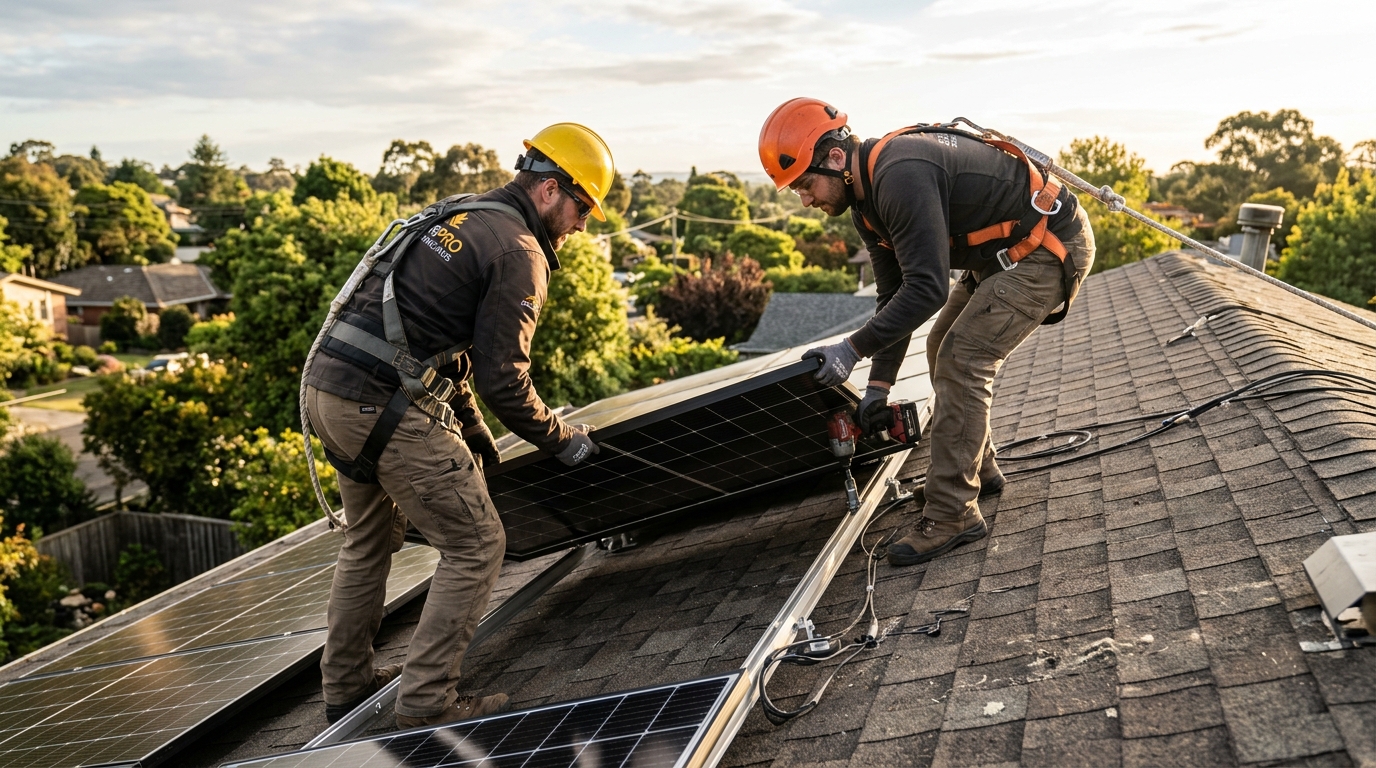
When an asphalt shingle, tile, or metal roof reaches the end of its lifespan or suffers severe storm damage, rooftop solar panels must be completely detached, safely lowered and stored, and reinstalled once the new roof is completed. This procedure is known throughout the roofing and insurance industries as a solar detach and reset (D&R).
On average, removing and reinstalling solar panels costs between $150 to $300 per panel, or $3,000 to $7,200 for a standard 20-to-24 panel residential system. However, when solar leasing companies, bankrupt installers, or uncooperative loan servicers get involved, costs can balloon past $10,000, and homeowners often face contractor deadlocks that leave active roof leaks unaddressed for months.
This guide breaks down national fair-market pricing benchmarks, contractor responsibilities, insurance claim supplement protocols, and legal rights when an installer holds your roof hostage.
Key Points
- Average Total Cost A typical 6kW to 8kW residential system costs between $3,000 and $6,500 for complete mechanical detachment, ground storage, new flashing/stanchions, and electrical re-commissioning.
- Roofer vs. Solar Tech Liability Most roofing warranties are voided if unlicensed personnel touch the roof penetrations, while solar manufacturer warranties are voided if non-certified technicians detach the photovoltaic modules.
- Insurance Coverage If a roof replacement is caused by a covered peril (hail, hurricane, fallen tree), homeowner's insurance typically covers detach and reset under Xactimate billing codes
ELE SLRRorRFG SLRR. - The Bankruptcy Trap If your original installer (such as Titan Solar Power or Pink Energy) went bankrupt, third-party detach and reset is legally permissible under UCC financing principles, provided code compliance is certified.
National Solar Panel Detach & Reset Cost Benchmarks
Table 1: Comprehensive Detach and Reset Cost Breakdown by System Size
| System Size (kW) | Typical Panel Count | Detachment & Storage | Reinstallation & Electrical Recertification | Total Fair Market Cost Range |
|---|---|---|---|---|
| 4 kW | 10 – 12 panels | $800 – $1,400 | $1,200 – $1,800 | $2,000 – $3,200 |
| 6 kW | 15 – 18 panels | $1,200 – $2,200 | $1,800 – $2,800 | $3,000 – $5,000 |
| 8 kW | 20 – 24 panels | $1,600 – $3,000 | $2,400 – $4,200 | $4,000 – $7,200 |
| 10 kW | 25 – 30 panels | $2,000 – $3,800 | $3,000 – $5,400 | $5,000 – $9,200 |
| 12+ kW | 32+ panels | $2,600 – $4,800 | $3,800 – $7,200 | $6,400 – $12,000+ |
Labor vs. Hardware Cost Breakdown
Unlike initial solar installation where hardware (panels, microinverters, racking) represents 50% of the contract value, detach and reset is almost entirely skilled electrical and roofing labor:
- Mechanical Unbolting and Disconnection (30%) Safely isolating string high-voltage DC circuits or AC microinverters, labelling electrical wiring, and unfastening mid-clamps and end-clamps.
- On-Site Staging & Protection (15%) Transporting fragile glass photovoltaic modules to ground level and crating them inside a climate-controlled garage or weather-protected pod.
- Flashing & Hardware Replacement (20%) Reroofing requires stripping off old flashing brackets. Reinstallation demands brand-new waterproof flashing boots, lag bolts, and chemical sealants matching local building codes.
- Remounting, Alignment & Re-Torquing (25%) Fastening rails, restoring grounding wire continuity, and resetting modules according to manufacturer specifications.
- Utility Interconnection Testing & Permitting (10%) Validating rapid shutdown compliance, inverter communication, and passing local municipal safety inspections if permits are triggered.
Why Roofers Refuse to Touch Solar Panels
Homeowners frequently ask: "Why can't my roofing contractor simply take the solar panels off and put them back on?"
Roofing companies refuse for two legal and structural reasons:
- Electrocution and Arc-Fault Liability Solar panels generate direct current (DC) whenever daylight is present. Standard roofing crews lack the specialized electrical licenses required to de-energize high-voltage rooftop strings safely.
- Voiding the Solar Workmanship Warranty Solar lease, PPA, and purchase agreements contain restrictive covenants. If an unauthorized third-party contractor unbolts the racking or alters roof penetrations, the solar company will disclaim all future responsibility for panel performance and roof leaks.
Conversely, if a solar technician damages your new architectural shingles or punctures the waterproof underlayment while remounting the array, your roofer will exclude those roof leaks from their 10-to-30 year workmanship guarantee.
The Golden Standard Always hire a dedicated solar detachment company or NABCEP-certified installer that provides a written transfer-of-workmanship warranty coordinated directly with your roofing general contractor.
Insurance Claims: Getting Detach & Reset Covered
When a roof replacement is initiated through a homeowner's insurance property casualty claim (e.g., following a severe hailstorm or windstorm), your insurance carrier is legally obligated to restore the property to its pre-loss condition. Because the roof cannot be replaced without unseating the solar array, the detach and reset cost is a covered consequential expense.
Common Adjuster Tactics & Xactimate Billing Codes
Insurance adjusters routinely attempt to lowball solar detachment estimates by quoting basic flat-labor rates rather than specialized electrical contractor pricing.
Homeowners and public adjusters must verify that their insurance claim summary includes the correct industry standard Xactimate line items:
RFG SLRR(Detach and Reset Solar Panels - Roofing component): Covers mechanical unfastening and refastening of mounting brackets and flashing.ELE SLRR(Detach and Reset Solar Panels - Electrical component): Covers licensed electrician disconnect, system lockout/tagout, rapid-shutdown verification, and inverter re-commissioning.CON MAT/ Storage Container Rental If panels cannot be securely stored in an existing locked garage during reroofing, temporary locked POD/mobile container rental must be approved as an auxiliary line item.
If your adjuster refuses to approve the full estimate from a certified solar contractor, file an immediate Insurance Estimate Supplement citing the manufacturer's mandatory handling specifications and local municipal electrical permit requirements.
What If Your Solar Company Went Bankrupt?
Hundreds of thousands of American homeowners with rooftop systems installed by bankrupt operations - such as Titan Solar Power, Pink Energy (Powerhome Solar), Vision Solar, and SunPower - face an emergency when their roof leaks.
When an installer is bankrupt or out of business:
- Review Your Financing Agreement Determine whether you own the system outright, financed it through a bank/solar lender (e.g., GoodLeap, Mosaic, Sunlight Financial, Cross River Bank), or entered a third-party PPA.
- Financed Systems (You Own the System) If your agreement is an installment loan, you own the equipment subject to a UCC-1 fixture filing. You have the absolute right to hire any qualified, licensed third-party solar electrical contractor to perform a detach and reset to protect your real property.
- Leased / PPA Systems In a lease or Power Purchase Agreement, the lender or system fund owns the equipment. Notify the asset management firm (or bankruptcy trustee) in writing via certified mail of the emergency reroofing requirement. Demand a 14-day scheduling window. If they fail to respond, invoke property preservation doctrines to protect your home from interior water devastation.
FAQ
How long does a solar panel detach and reset take?
The detachment phase typically takes 4 to 8 hours for a two-person certified crew on an average residential home. The panels remain safely stored during reroofing (usually 2 to 5 days). Reinstallation and testing take an additional 6 to 10 hours once the new roof is fully cured and inspected.
Does homeowners insurance pay for solar panel removal when getting a new roof?
Yes, but only if the roof replacement is part of a covered insurance claim, such as storm, hail, or falling tree damage. If you are replacing an aged roof due to normal wear and tear or maintenance, insurance will not pay for solar removal, and the expense must be covered out of pocket.
Can I leave my solar panels on the roof while shingles are replaced around them?
No. Roofing contractors cannot properly install waterproof underlayment, ice-and-water shield, or new shingles underneath the solar racking footprint while panels remain mounted. Attempting to roof around panels guarantees premature roof failure and chronic roof leaks.
What should I do if Sunrun or Tesla takes months to schedule panel removal?
If an active roof leak is causing structural damage and your solar provider refuses to schedule timely detachment (see our guides on Sunrun panel removal delays and Tesla solar removal costs), submit a written formal Notice of Emergency Property Mitigation. Document all communication, obtain an estimate from a certified independent third-party electrician, and contact our team through our guided intake review for contractual dispute assistance.
Next Research Steps
Use these resources to connect this issue with the broader solar scam pattern, the relevant legal framework, and the next practical action.
Solar panel scams
Start with the main solar panel scams guide for the broad definition and recovery roadmap.
Solar financing fraud compensation
Use this guide for loan, dealer-fee, payment-jump, PACE, lease, and lender-defense issues.
Homeowner legal rights
Review cancellation, rescission, UDAP, TILA, Holder Rule, arbitration, and lawsuit options.
Misled by a solar company?
Free 24-hr review · Statutory fee-shifting